
True personal growth is rarely born from a single breakthrough. Instead, it is forged in the quiet choices we make every single day. Here at Clemson Martial Arts, we recognize that cultivating self-discipline is the absolute cornerstone of character development. It is a foundational life skill that equips students to thrive, whether they are training on our mats, studying in a classroom, or navigating the complexities of everyday life.
Redefining What It Means to Be Disciplined
Many people view discipline as a form of restriction or external rule-following. In reality, true self-discipline is the ultimate form of personal freedom. It is the ability to align your actions with your long-term goals rather than your short-term impulses.
For young children and adults alike, developing this trait isn’t about achieving flawless perfection. It is about learning the art of the pivot—discovering how to maintain focus, honor your commitments, and push through frustration even when the initial excitement of a new goal begins to fade.
How Discipline is Structured on the Mat
The training floor acts as a safe, structured laboratory for behavioral growth. Every single class offers a continuous series of micro-lessons in self-regulation.
We intentionally emphasize the value of the small moments:
- Standing in attentive stances while waiting for instruction.
- Embracing the repetitive practice required to master a basic movement.
- Actively listening to feedback without interruption.
- Showing profound respect to peers and instructors alike.
There are no shortcuts in martial arts. By experiencing a direct correlation between steady, focused effort and tangible personal progress, students naturally internalize a growth mindset. They learn firsthand that excellence is a habit, not an accident.
Bringing the Mat Home: Real-World Applications
The ultimate measure of our training is how a student carries themselves outside of our studio doors. Parents routinely share how the structured focus of our classes begins to organically manifest at home.
In a household environment, developing self-discipline frequently looks like:
- Initiating and completing schoolwork without parental prompting.
- Taking ownership of daily household responsibilities and chores.
- Exhibiting patience and emotional control during conflicts with siblings.
- Pausing to take a breath and regulate emotions rather than reacting impulsively.
- Viewing mistakes as natural learning opportunities rather than reasons to quit.
These everyday victories are the exact moments where a child transforms accountability from an abstract concept into a practical lifestyle choice.
Empowering Academic and Lifelong Success
The mental stamina cultivated through martial arts yields massive dividends throughout a student’s academic journey and future career. Within the classroom, highly self-disciplined children are uniquely equipped to block out digital and social distractions, manage their study schedules effectively, and navigate the emotional highs and lows of complex academic challenges.
Furthermore, this internal drive enhances performance in other sports, creative arts, and social circles by fostering strong coachability, an elite work ethic, and calm confidence under pressure. Students quickly realize that their ultimate potential is entirely within their own control.
What Families Notice Over Time
As these habits solidify, families generally begin to notice a profound shift in their child’s overall demeanor. You will likely see a dramatic rise in resilience when they are faced with difficult tasks, a deeper sense of intrinsic pride in their achievements, and a highly mature level of emotional intelligence.
As we help our community chase down their personal goals this year, remember that consistency beats intensity every single time. At Clemson Martial Arts, we are deeply committed to partnering with families to cultivate the resilience, integrity, and self-discipline our students need to conquer challenges on the mat, excel in their education, and champion their futures.
Peer-Reviewed Resources for Further Reading
- Positive Youth Development & Goal Attainment: Frontiers in Psychology explores how structured progression systems in traditional movement arts foster emotional regulation and long-term goal management in youth.
- Enhancing Executive Function: Research via PubMed Central (PMC) highlights the direct link between the mindful, repetitive mechanics of martial arts and improvements in attention spans, working memory, and cognitive flexibility.
- Behavioral Self-Regulation in Schools: Long-term studies demonstrate that children engaged in structured character-based physical training show significant baseline improvements in classroom behavior and peer socialization.
About the author : Clemson Martial Arts

Founded in 2009 by Sarah and Toran Gordinier, who have both practiced martial arts for over 20 years and have a commitment to share their passion with students of all ages. Clemson Martial Arts is trade name of Upstate Holistic Health, LLC.
More Articles from Clemson Martial Arts
Featured Programs
More Posts
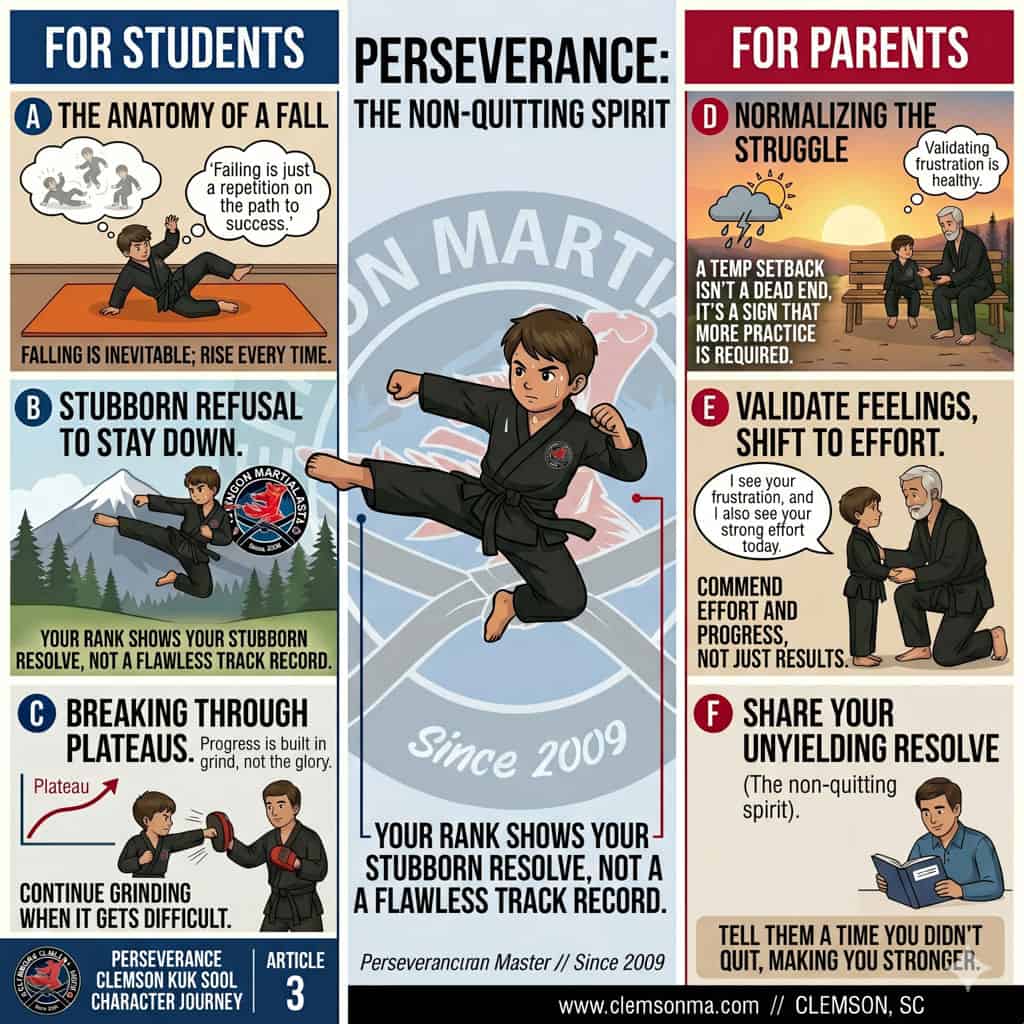
Perseverance: The “Non-Quitting” Spirit
In our previous article, we explored Self-Discipline and the power of mastering your own choices rather than letting your mood dictate your actions. But what happens when you do show up, you give it your [...]
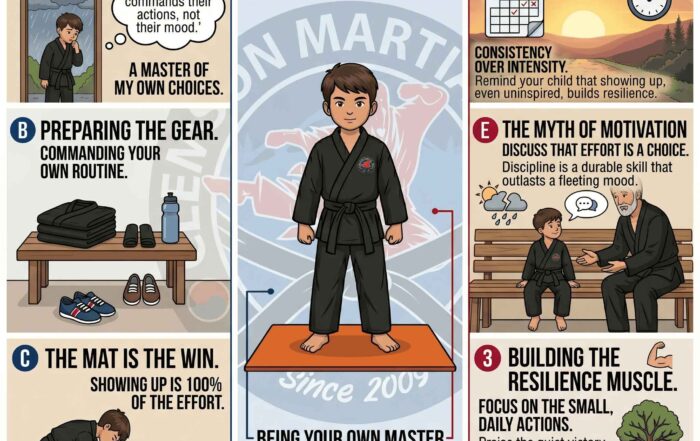
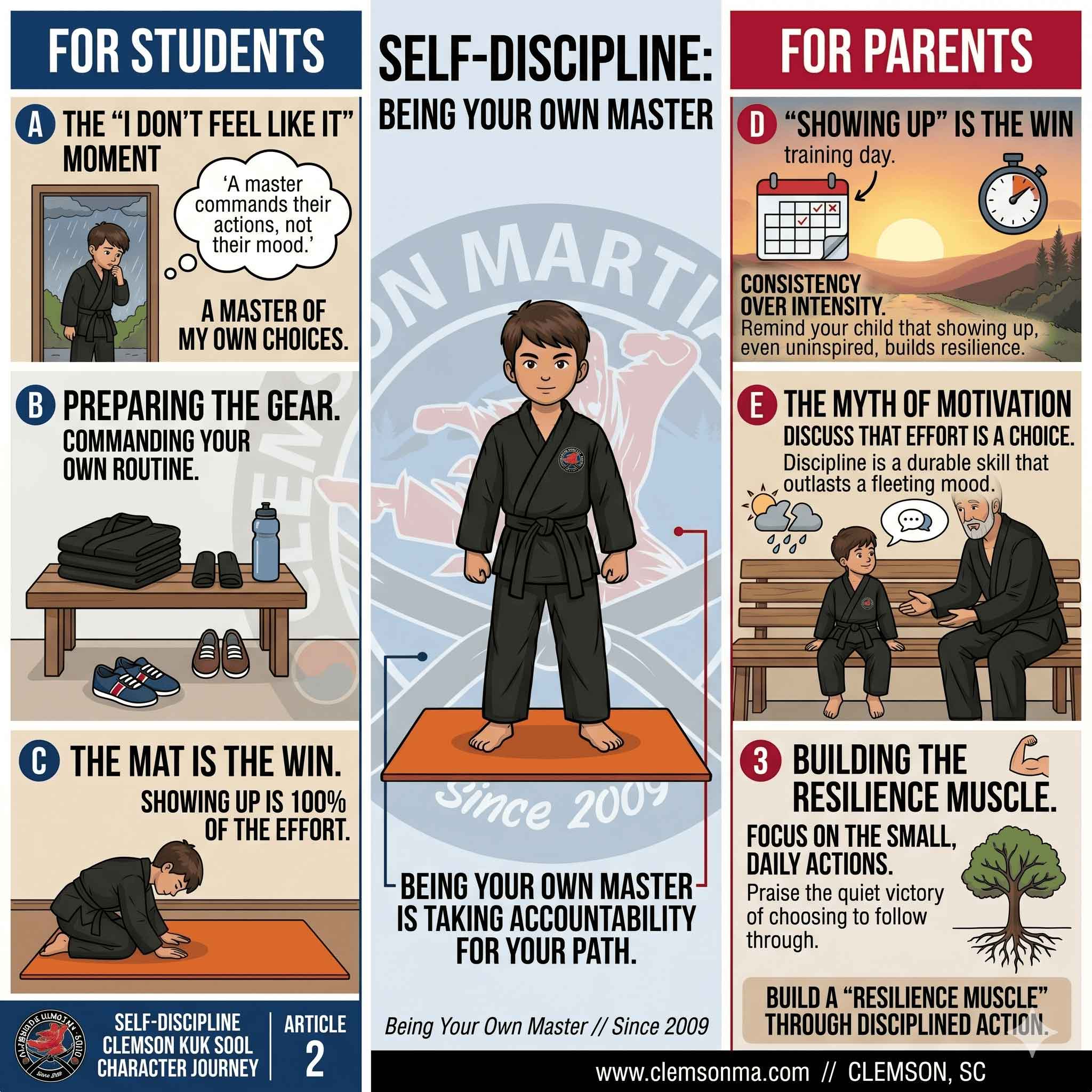
Self-Discipline: Being Your Own Master
For Students: The "Inspiration" Trap Training When You Don't "Feel Like It" Every martial artist, from a white belt to an 8th-degree Master, has days where they don't feel like training. Maybe it’s raining, maybe [...]

April Newsletter from Clemson Martial Arts
March brought us another great KickFEST and that was the perfect warm-up for our upcoming CA Regional Tournament. Apart from that we have a lot of great things planned at home and further into the [...]
